Conservation
Alameda County and the rest of the Bay Area are home to a rich diversity of wildlife. From the Sunol and Ohlone Regional Wilderness areas that support the highest density of golden eagle breeding pairs in North America to San Francisco Bay’s shorelines and tidal wetlands that support millions of shorebirds, countless other birds and wildlife species rely year-round on our native habitats.
There are continual threats of development and conversion of these habitats. The Ohlone Audubon Society is actively involved in addressing these issues at the local level to save our local wetlands, streams and other wildlife habitats.
If you are intersted in how you can be involved to help conserve these habitats, contact Carin High, Ohlone Audubon Conservation Chair.
More information on current conservation efforts can be found below:
Eastern Alameda County Conservation Issues
Ohlone Audubon Socieity is part of the Friends of Tesla Park alliance, building local support and advocating for the State Resources Agency and
State Parks to designate Tesla Park as a non-motorized park and preserve.
The natural diversity present in Tesla Park should be protected and treasured as a jewel in our nature park crown that surrounds the Tri-Valley. The breadth and depth of the Listed and Special Status Species in Tesla Park is unique. In terms of avian species, all Focal Species from the East Alameda Conservation Strategy are present in Tesla including Golden Eagle, Tri-Colored Blackbird and Western Burrowing Owl. Recent surveys completed of the Diablo/Ohlone area document that at least 3 Golden Eagle pairs have their nests on or territories overlaying the Tesla Park land.
Visit the Friends of Tesla Park website to learn more about the efforts to save this valuable property. https://www.teslapark.org/
Solar Policy
With an increased interest in providing clean enery and the potential for solar development in Alameda County, the Board of Supervisors has directed County Planning staff to develop a solar policy for Alameda County. Currently proposed large-scale solar developments in eastern Alameda County will impact habitat for several raptor and grassland bird species including wintering habitat for Swainsons hawks, ferruginous hawks and burrowing owls. To find out more information on the policy development and public review process, visit the County’s website at: https://www.acgov.org/cda/planning/landuseprojects/solarpolicies.htm
Williamson Act Revisions
A recent audit by the California Department of Conservation of the County’s Williamson Act led to the determination that several areas of the act needed to be revised to remain in complaince. The Williamson Act provides valuable provisions to private landowners to keep agricultural land in agricultre and provide openspace. Most of eastern Alameda County’s rangeland provides important breeding, roosting and foraging habitat for several bird species. To find out more information on the Williamson Act revisions, visit the County’s website at: https://www.acgov.org/cda/planning/landuseprojects/williamson_act.htm
Shadow Cliffs Regional Recreational Area
The East Bay Regional Park District is in the process of developing a Land Use Plan Amendment (LUPA) for the Shadow Cliffs Regional Recreational Area.
For more information and to review the complete LUPA visit the EBRPD website: http://www.ebparks.org/planning#shadow
More information can also be found on the Friends of Shadow Cliffs website: http://www.friendsofshadowcliffs.com/
Pleasanton Ridge Land Use Plan
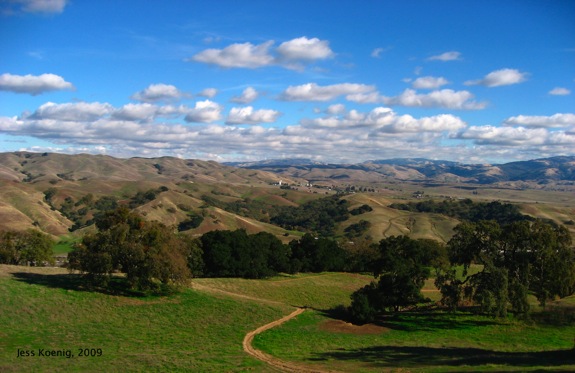
The East Bay Regional Park District is currently developing a Land Use Plan for Pleasanton Ridge Regional Park. The early proposals include opening new acreage for hiking and birding and building a new trail head north of the existing one on Foothill Ave. in Pleasanton.
More information can be found on the Park’s website at http://www.ebparks.org/planning#prlus
The San Francisco Bay Area Rapid Transit District (BART) has prepared a Draft Program Environmental Impact Report (EIR) and Final Program EIR which evaluate ten different alignment, station, and maintenance facility combinations originating in the Interstate 580 (I-580) median at the existing Dublin/Pleasanton BART Station, and traveling eastward to Pleasanton and Livermore.
For more information or to download the Final Program EIR visit http://www.barttolivermore.org/
Iron Horse Trail – Dublin/Pleasanton BART to Santa Rita Road Study
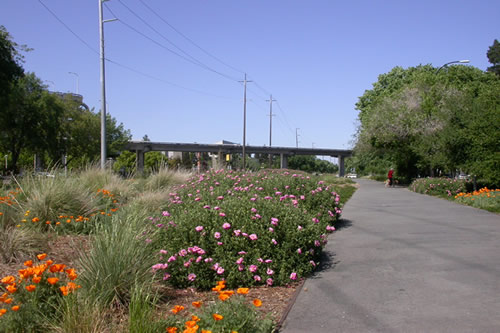
The East Bay Regional Park District in partnership with the City of Pleasanton will conduct a feasibility study that determines the operationally-required elements, community-desired elements, and engineering challenges to building approximately 1.5 miles of the Iron Horse Trail in Pleasanton, between the Dublin/Pleasanton BART Station and Santa Rita Road. Currently, there exists a minimally-used right-of-way through the Hacienda Business Park, which could be used for the Iron Horse Trail. Once this gap is completed, bicycle and pedestrian access between the BART station, Hacienda Business Park and area residents will be greatly improved. The project is funded by the District, the City of Pleasanton and by Measure B transportation funds from the Alameda County Improvement Authority.
For information on this planning effort contact Sean Dougan 510-544-2611 or sdougan AT ebparks.org or visit http://www.ebparks.org/planning#iron
For more information on the Iron Horse Trail visit https://www.ebparks.org/parks/trails/iron_horse and http://www.ironhorsecorridor.org/.
Altamont Pass Wind Resource Area Conservation Plan

An alarming number of birds are killed by wind turbines in the Altamont Pass each year. Golden eagles, American kestrels, red-tailed hawks, and burrowing owls are among the species that are affected the most. As a result of a lawsuit between Golden Gate Audubon Society, Californian’s for Resposible Energy (CARE), Alameda County, and the wind power companies, a Settlement Agreement was adopted in 2007 to obtain 50% reduction in avian mortality rates.
The Altamont Pass Wind Resources Area (APWRA) Conservation Plan (Plan) is being developed to minimize impacts to birds caused by wind turbine operations, and conserve birds and other terrestrial species while allowing wind energy development and operations in the APWRA. The Plan is a joint Natural Community Conservation Plan (NCCP) and Habitat Conservation Plan (HCP) under state and federal laws, respectively.
The Plan is the first of its kind in California, and focuses on conserving the natural communities and sensitive species affected by the impacts of operation, maintenance and construction of wind turbines. It is a comprehensive, long-term, and ecosystem-based plan.
Ohlone Audubon Society is a member of the Stakeholder Committee and continues to be involved in the process of the Plan development including document review.
More information on the current Conservation Planning process and the effects on the birds can be found on the following websites:
Golden Gate Audubon Society Avian Mortality Information
Altamont Pass Wind Resource Area Conservation Plan
Scientific Review Committe for the Altamont Pass Wind Resource Area
Southern Alameda County Conservation Issues
Download the most recent Online Kite Call for status udpates
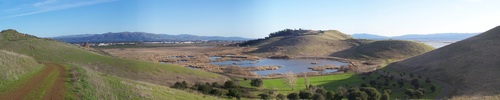
The Fremont City Council approved the Patterson Ranch development in March 2011. The good news is that the number of housing units to the east of Ardenwood Blvd. has been reduced to 500 and the lands to the west of Patterson Slough will be donated to the EBRPD.
You may review the final EIR by visiting the City of Fremont’s website at: http://www.fremont.gov/index.aspx?NID=430.
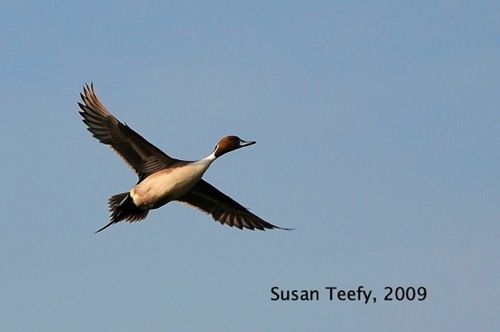
Whistling Wings and Pintail Duck Clubs – A lawsuit has been filed that challenges the adequacy of the EIR. The primary concerns are over the development of Area 4 that requires the construction of an overpass to access the site and could require the import of up to 2.1 million cubic yards of fill to raise the land up to 10 feet out of the current 100-year flood plain. This does not account for conservative predictions of sea level rise after 2050. Up to 85.6 acres of wetlands could be filled to construct upscale housing and possibly a golf course (should sufficient funds be raised by the sale of houses). Area 4 is continually disced and water is pumped off, but the site contains a mosaic of wetlands and functions as important, undeveloped uplands. The site supports the endangered salt marsh harvest mouse, waterbirds, waterfowl, and the burrowing owl. Federal and state permits will be required to develop the area.
For more information and to view the Final EIR visit http://www.newark.org/departments/planning-and-economic-development/on-going-projects/area-3-and-4-specific-plan-project/
Area 4 Wetlands Video: https://www.youtube.com/watch?v=jYao5TIAq6A
The U.S. Fish and Wildlife Service is preparing a comprehensive conservation plan (CCP) for the Don Edwards San Francisco Bay National Wildlife Refuge. For more information visit: http://www.fws.gov/cno/refuges/DonEdwards/DonEdwards.cfm